


Preserving Tooth Structure Starts With the Right Instruments
Modern dentistry isn't always about how much tooth structure can be removed. Increasingly, it's about how much healthy tooth structure can be preserved.
This philosophy is central to minimally invasive dentistry, an approach that emphasizes prevention, early intervention, and conservative treatment whenever clinically appropriate.
For restorative dentists and general practitioners, that can mean taking a more selective approach to caries excavation rather than removing dentin indiscriminately.
As Global Surgical continues expanding its selection of MANI dental instruments, we're exploring how different bur designs support specific clinical objectives.
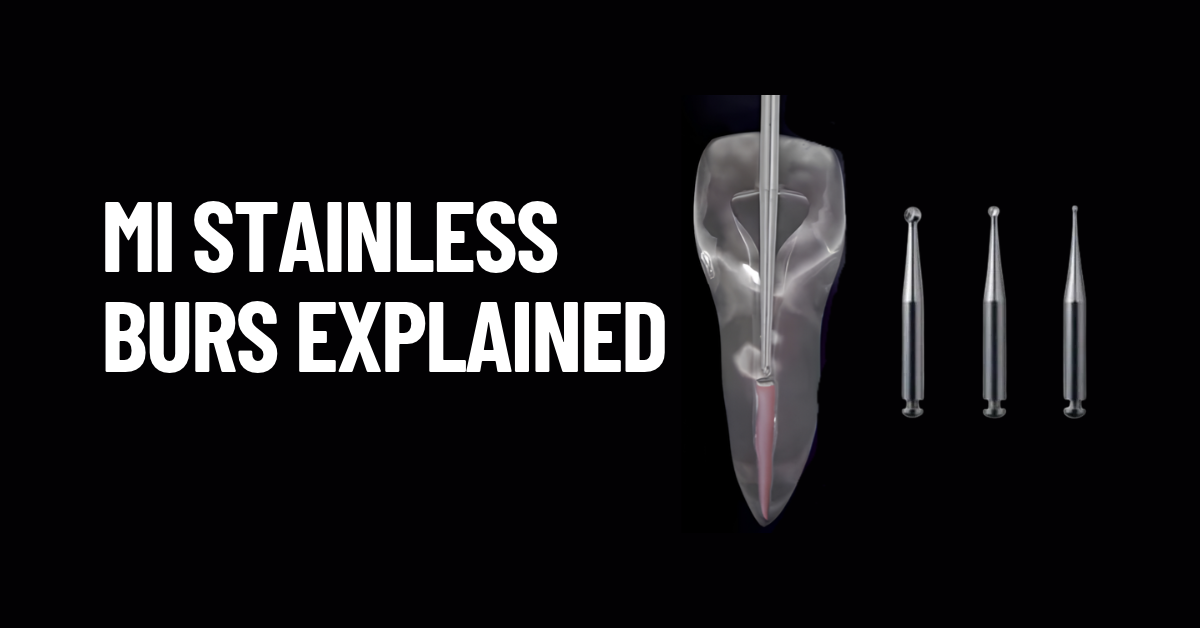
One example is the MANI MI Stainless Bur, an instrument designed for minimally invasive caries removal.
What Is Minimally Invasive Dentistry?
Minimally invasive dentistry focuses on preserving natural tooth structure while treating disease and restoring function.
Rather than automatically removing large amounts of tooth structure, the clinician evaluates what needs to be removed, what can be preserved, and how treatment can support the long-term health of the tooth.
This approach can include:
- Early detection and monitoring of caries
- Preventive and remineralization strategies
- Selective removal of carious tissue
- Conservative cavity preparation
- Adhesive restorative techniques
- Preservation of healthy enamel and dentin
When restorative treatment is necessary, the goal is to remove the tissue required for successful treatment without unnecessarily sacrificing sound tooth structure.
That makes instrument selection an important part of the process.
What Are MI Stainless Burs?
MI Stainless Burs are dental rotary instruments designed for minimally invasive caries excavation.
Unlike conventional diamond burs, which use an abrasive surface, or carbide burs, which use hard cutting blades, MI stainless burs are designed to support more selective removal of softened or decalcified dentin.
MANI MI Stainless Burs are intended to help clinicians remove carious dentin while limiting unnecessary cutting of harder, healthier tooth structure.
Their stainless steel construction and cutting design make them useful for conservative cavity preparation and caries removal.
In other words, these burs are designed for a different clinical objective than a bur used for aggressive enamel reduction or rapid removal of restorative material.
Why Selective Caries Removal Matters
Caries doesn't always affect the entire thickness of dentin in the same way.
As decay progresses, the affected tooth structure can vary in hardness and degree of demineralization.
This creates an important clinical distinction between removing infected or heavily softened tissue and preserving dentin that may still be suitable to retain.
Selective caries removal is a tissue-preserving approach in which the extent of excavation is determined by the clinical situation, including lesion depth and proximity to the pulp.
For deeper lesions, preserving appropriate dentin near the pulp may help reduce the risk of pulp exposure. At the same time, adequate peripheral excavation remains important for establishing a suitable restorative seal.
The objective isn't simply to leave more dentin behind. It's to make informed decisions about which tissue should be removed and which can be preserved.
How Do MANI MI Stainless Burs Work?
The defining characteristic of an MI stainless bur is its intended cutting behavior.
Conventional carbide burs are designed for efficient cutting of tooth structure and restorative materials. Diamond burs remove material through abrasion.
MI stainless burs, by comparison, are designed to cut softened carious dentin while offering less aggressive cutting against harder tooth structure.
This can provide a degree of tactile feedback as the clinician moves through dentin of different hardness.
However, the instrument doesn't independently determine whether tissue is clinically appropriate to retain. The dentist must still assess the lesion, cavity margins, remaining dentin, and restorative requirements.
The bur supports selective excavation; it doesn't replace clinical judgment.
MI Stainless Burs vs. Carbide Burs
Both MI stainless burs and carbide burs can be used during restorative procedures, but they are designed for different priorities.
Carbide burs feature hard cutting blades that efficiently remove tooth structure and restorative materials. They are useful for cavity preparation, access preparation, and other procedures where effective material removal is required.
MI stainless burs emphasize controlled removal of softened dentin during conservative caries excavation.
| Feature | MI Stainless Burs | Carbide Burs |
|---|---|---|
| Primary purpose | Conservative caries excavation | General cutting and preparation |
| Cutting characteristics | Intended for selective removal of softened dentin | Efficient cutting of tooth structure and other materials |
| Common application | Minimally invasive caries removal | Cavity preparation, access, restoration removal |
| Clinical priority | Preserving appropriate tooth structure | Efficient, controlled material removal |
Neither instrument is universally better.
The appropriate choice depends on the material being removed and the objective of that particular stage of treatment.
MI Stainless Burs vs. Diamond Burs
Diamond burs have another important role in restorative dentistry.
Their abrasive surfaces make them useful for cutting and shaping enamel, dentin, ceramics, and restorative materials.
They're often selected for preparation, reduction, contouring, and finishing applications.
MI stainless burs are more specialized.
Rather than focusing on broad reduction or shaping of hard materials, they're designed for conservative excavation of softened dentin.
For a clinician treating a carious lesion, both instruments may have a place in the workflow.
A diamond bur may be useful for gaining access through enamel or existing restorative material, while an MI stainless bur may be selected for a subsequent stage of caries excavation.
The important distinction is that different bur designs support different treatment objectives.
Where Do MI Stainless Burs Fit Into the Restorative Workflow?
A minimally invasive approach begins well before the clinician selects a bur.
Diagnosis, lesion assessment, treatment planning, and restorative strategy all influence how much tooth structure should be removed.
When operative treatment is indicated, an MI stainless bur may fit into a workflow that includes several stages.
1. Evaluate the Lesion
Assess the extent of caries, remaining tooth structure, pulpal considerations, and the intended restorative approach.
2. Establish Appropriate Access
Select the instrument needed to access the carious tissue while preserving as much sound structure as clinically appropriate.
Depending on the case, this may involve a diamond or carbide bur.
3. Perform Controlled Caries Excavation
An MI stainless bur may be used to remove softened dentin while helping the clinician work conservatively.
4. Reassess the Preparation
Evaluate the remaining dentin, cavity margins, and requirements for the planned restoration.
5. Complete the Restoration
Proceed with the selected restorative technique according to the clinical situation and material manufacturer's instructions.
This isn't a universal sequence for every lesion. Rather, it illustrates how specialized instruments can support a broader tooth-preserving treatment philosophy.
Is Minimally Invasive Dentistry Only for Small Cavities?
Not necessarily.
The principles of preserving healthy tooth structure and avoiding unnecessary removal apply across a range of restorative situations.
For smaller lesions, this may involve limited preparation and selective excavation.
For deeper lesions, treatment planning becomes more complex, particularly when caries approaches the pulp.
In those cases, the decision about how much dentin to remove depends on the clinical diagnosis, pulpal status, restorative requirements, and current evidence-based treatment recommendations.
An MI stainless bur can support controlled excavation, but it isn't a substitute for selecting the appropriate caries management strategy.
Why Magnification Complements Conservative Dentistry
Minimally invasive dentistry and magnification share a common objective: helping clinicians work with greater attention to detail.
A dental operating microscope provides magnification and illumination that can support close examination of the treatment field.
During restorative procedures, this may help clinicians inspect preparation margins, identify small anatomical details, and evaluate areas where additional treatment may be needed.
Combined with an instrument intended for conservative caries excavation, enhanced visualization can support a more deliberate approach to treatment.
At Global Surgical, this connection is particularly relevant.
For decades, we've helped clinicians see more through dental microscopy. Now, with our expanding MANI product selection, we're also highlighting the instruments used to perform detailed clinical work under magnification.
Better visualization and thoughtful instrument selection can work together toward the same goal: preserving tooth structure while delivering appropriate treatment.
Building a More Versatile Dental Bur Selection
No single dental bur is ideal for every procedure.
A well-rounded bur selection gives clinicians options based on the material being removed and the intended clinical result.
For example:
- Diamond Burs: Access preparation, cutting hard materials, contouring, and refinement
- Carbide Burs: Efficient cutting, cavity preparation, and restoration removal
- MI Stainless Burs: Conservative excavation of softened carious dentin
Understanding these differences helps clinicians choose the instrument that matches the task rather than relying on one bur type for every stage of treatment.
Shop MANI MI Stainless Burs from Global Surgical
As Global Surgical expands its dental instrument offering, we're pleased to bring clinicians a growing selection of MANI burs designed for different clinical applications.
From diamond and carbide burs to specialized MI stainless burs, these instruments provide options for restorative dentistry, endodontic access, and conservative tooth preparation.
Explore our MANI collection and find the instruments that fit your preferred clinical workflow.
Shop MANI MI Stainless Burs and Dental Instruments at shop.globalsurgical.com


