


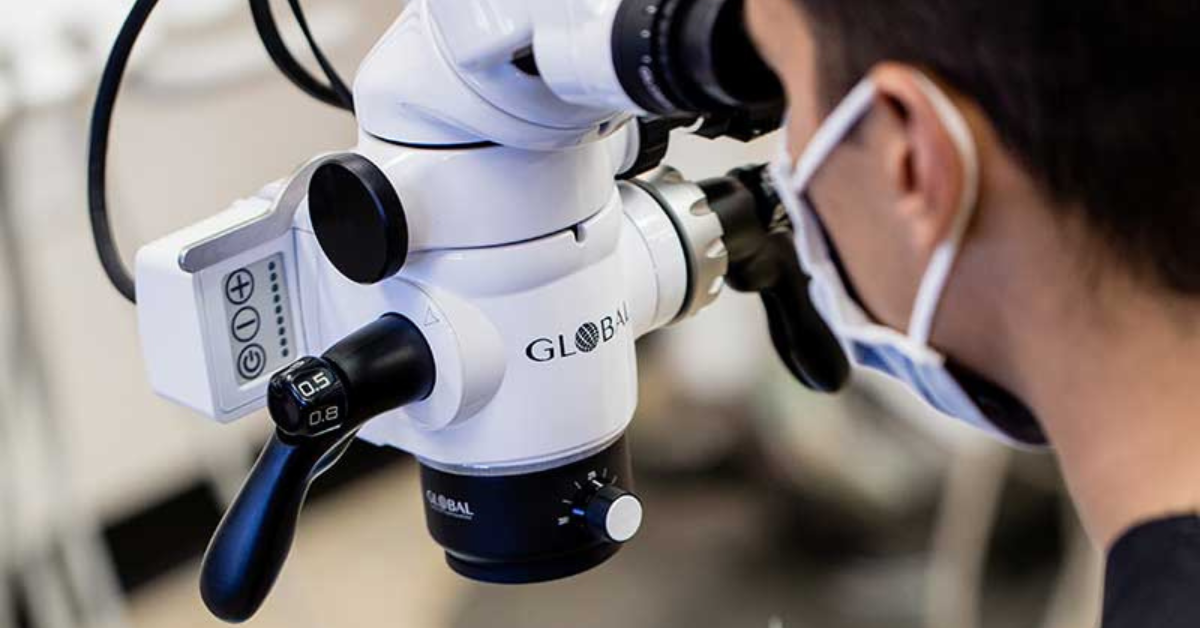
For dental professionals, better visualization isn't just about seeing more. It may also be about working more comfortably, maintaining better posture, and protecting your long-term career.
A newly published scientific study is adding evidence to a conversation that has become increasingly important in dentistry: the relationship between visualization technology and practitioner ergonomics.
Published in October 2026 in the International Journal of Industrial Engineering: Theory, Applications and Practice, the study titled "Impact of Visual Aids on Posture And Musculoskeletal Risk Among Dental Practitioners: A Human Factors Approach" examined how different visualization methods affect the posture and musculoskeletal risk of dental practitioners.
The findings offer compelling evidence in favor of dental operating microscopes, demonstrating significantly lower ergonomic risk scores compared with the other visualization methods evaluated.
For dentists considering an investment in microscope technology, the research provides another reason to think beyond magnification alone.
The Study: Comparing Three Ways Dentists Work
Researchers evaluated 90 dental practitioners, divided equally into three groups based on their visualization method:
- Naked-eye dentistry: Practitioners working without magnification.
- Magnification loupes: Practitioners using dental loupes.
- Dental operating microscopes: Practitioners using a microscope for visualization.
Each group performed standardized clinical tasks while researchers captured their working postures using high-resolution photography from multiple angles.
The researchers then evaluated the practitioners using three established ergonomic assessment methods:
- Rapid Upper Limb Assessment (RULA): Evaluates postural risk factors affecting the upper limbs, neck, and trunk.
- Rapid Entire Body Assessment (REBA): Assesses ergonomic risks associated with whole-body working postures.
- Branson's Posture Assessment Instrument (PAI): Evaluates posture-related ergonomic concerns in dental practice.
By using three different assessment methods, researchers were able to examine the relationship between visualization and posture from multiple perspectives.
What Did the Researchers Discover?
The dental operating microscope group demonstrated the lowest ergonomic risk scores across all three assessment methods.
The microscope group recorded the following average scores:
| Assessment Method | Microscope Group Score |
|---|---|
| RULA | 3.10 |
| REBA | 2.80 |
| PAI | 3.23 |
Across all three assessment methods, the researchers identified statistically significant differences between the visualization groups (p < 0.001).
Lower scores generally indicate lower assessed ergonomic risk.
Importantly, the researchers highlighted improvements associated with the neck and trunk regions, two areas that can experience considerable physical strain during dental procedures.
The findings suggest that visualization methods may play an important role in encouraging healthier working postures.
Although the research measured posture and ergonomic risk rather than long-term injury rates, it provides useful evidence for dentists evaluating their clinical working environment.
Why Does Visualization Affect Dental Ergonomics?
Think about how much time a dentist spends looking down into a patient's mouth.
Without adequate visualization, practitioners may instinctively lean forward, lower their heads, twist their necks, or reposition their bodies to improve their view of the treatment area.
Over time, maintaining these awkward or static positions can contribute to physical discomfort and increased musculoskeletal risk.
Magnification technology helps address the visibility challenge, but not all visualization systems position the clinician in the same way.
Dental operating microscopes offer a different approach.
Instead of requiring the practitioner to bring their eyes and body closer to the treatment area, a properly positioned microscope allows the clinician to view the working field through an optical system while maintaining a more upright posture.
The potential advantages include:
- Improved neck positioning: Reducing the need to bend forward to view small anatomical details.
- Better trunk alignment: Encouraging a more upright and balanced seated position.
- Reduced postural compensation: Allowing practitioners to adjust visualization without constantly repositioning their bodies.
- Enhanced visual access: Providing magnification and illumination that support detailed clinical work.
Of course, a microscope is only one component of an ergonomic operatory. Patient positioning, clinician seating, equipment placement, working habits, and proper training all contribute to an effective ergonomic workflow.
Dental Loupes vs. Microscopes: What Does This Research Mean?
Dental loupes have become a familiar part of modern dental practice, offering magnification in a relatively compact, wearable format.
They can provide meaningful improvements in visualization and, when properly selected and fitted, may support better working posture compared with unaided vision.
However, the newly published research suggests that dental operating microscopes may offer additional ergonomic advantages.
One important difference is the relationship between the clinician's head position and the direction of observation.
With many traditional loupe systems, the practitioner must orient their head toward the working field, even when using magnification.
A dental operating microscope uses an adjustable optical viewing system, allowing the practitioner to position the microscope relative to the patient while maintaining a more neutral head and neck position.
For dentists who spend long hours performing precision procedures, this distinction can be particularly important.
The study does not establish that every microscope will outperform every loupe configuration in every clinical setting. However, its findings support considering microscope technology as part of a broader strategy for improving dental ergonomics.
Ergonomics: An Investment in Your Career
When dentists evaluate new equipment, discussions often focus on clinical capabilities, treatment efficiency, and return on investment.
But what about the physical demands of practicing dentistry?
Dentists, endodontists, and other dental specialists often perform detailed procedures that require sustained concentration and precise movements. Their ability to maintain comfortable working positions is an important part of their daily professional experience.
That makes ergonomics more than an equipment feature.
It's an investment in the clinician.
A dental operating microscope can offer value beyond enhanced visualization by helping practitioners develop workflows that prioritize both clinical precision and working posture.
While no single piece of equipment can eliminate the risk of work-related musculoskeletal disorders, adopting ergonomic technologies and habits may help reduce exposure to some of the physical stresses associated with clinical dentistry.
Global Surgical: Magnification Designed Around the Clinician
At Global Surgical Corporation, we've long believed that exceptional visualization and clinician comfort should go hand in hand.
Our American-made A-Series dental operating microscopes are designed to support precision dentistry with flexible positioning, high-quality optics, and configurations that can accommodate different clinical environments.
From endodontics to restorative dentistry and other microscope-assisted procedures, our goal is to help dental professionals achieve exceptional visualization without unnecessarily compromising their working posture.
Global Surgical microscopes offer several features that can support an ergonomic clinical setup:
- Adjustable microscope positioning: Helps clinicians position the optical system around the treatment area.
- High-quality magnification and illumination: Supports detailed visualization without requiring the practitioner to lean closer to the patient.
- Flexible mounting configurations: Accommodates different operatory layouts and workflow preferences.
- Modular design: Allows practitioners to configure their microscope around their clinical needs and preferences.
Manufactured in St. Louis, Missouri, Global Surgical microscopes are built with an emphasis on optical performance, durability, and long-term value.
While the 2026 study did not evaluate Global Surgical microscopes specifically, its findings reinforce the importance of the ergonomic principles that help guide our approach to microscope design.
The Bottom Line: Better Vision, Better Posture
The findings from this new study are significant for dental professionals evaluating how visualization technology affects their daily work.
By comparing naked-eye dentistry, magnification loupes, and dental operating microscopes, the researchers demonstrated that the microscope group achieved the lowest ergonomic risk scores across all three assessment methods.
For dentists, the takeaway is straightforward: The way you visualize your work may have a meaningful impact on how you position your body throughout the day.
And when considering an investment in dental technology, that's a benefit worth examining.
At Global Surgical, we're proud to help dental professionals discover the advantages of microscope-assisted dentistry, from improved visualization to more ergonomically conscious workflows.
Ready to see the difference for yourself?
Explore our American-made dental operating microscopes and discover how Global Surgical can help you build a more comfortable, precision-focused clinical environment.
Learn more at globalsurgical.com.

Research Reference
Attallah, R. A., Raja Ghazilla, R. A., Bin Abu Hassan, M. I., & Almarzok, M. I. (2026). Impact of Visual Aids on Posture And Musculoskeletal Risk Among Dental Practitioners: A Human Factors Approach. International Journal of Industrial Engineering: Theory, Applications and Practice, 33(5).

